
The Benefits of Aeration & Overseeding
If there's one service that does the most for a New England lawn, it's aeration and overseeding in the fall. Paired with a healthy fertilization program, it's the best way to strengthen a lawn, thicken it up, and build the deep, strong root system that carries your grass through the rest of the year.
Most lawns thin out over time, and the soil underneath gets compacted from foot traffic, mowing, and everyday use. Aeration and overseeding reverses both problems at once. Here's what it actually does for your lawn, and why fall is the time to do it.
What Aeration and Overseeding Does
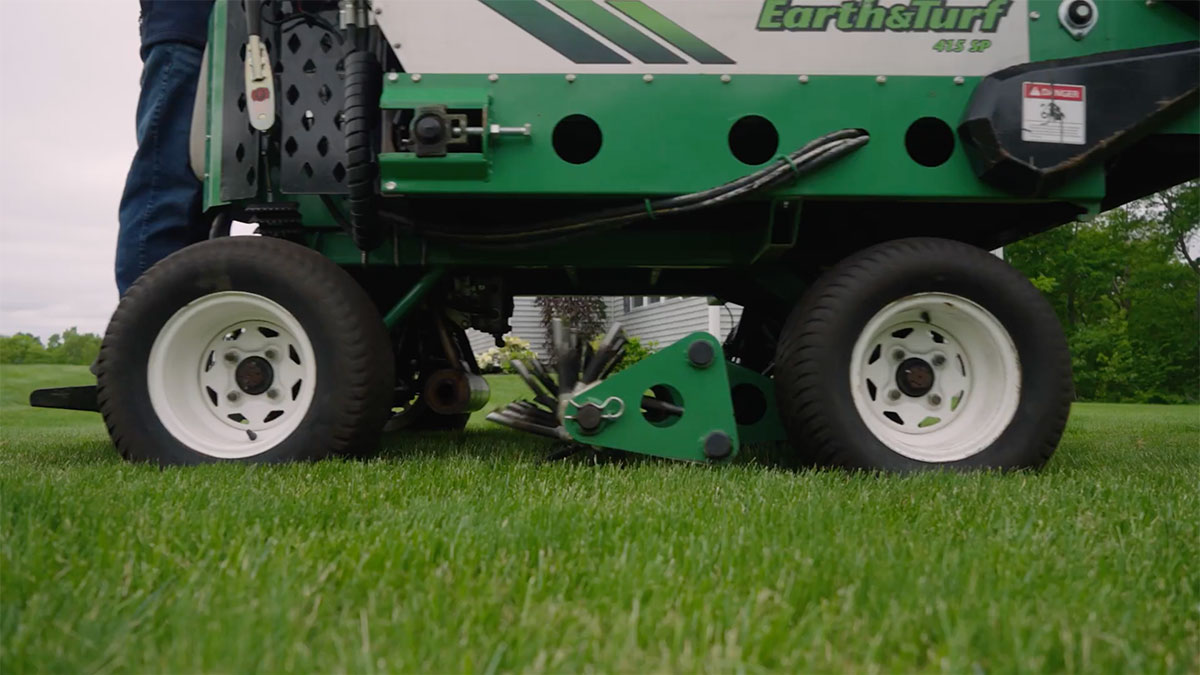
Aeration is the process of pulling small cores of soil out of the lawn, which relieves compaction and opens the soil up. Overseeding is spreading fresh grass seed across the lawn right afterward, while those openings give the seed excellent contact with the soil. The two are almost always done together, because aerating creates the ideal conditions for new seed to take hold. On its own, aeration helps the existing grass. Combined with seed, it also fills the lawn back in.
It Gets Air, Water, and Nutrients to the Roots
When soil is compacted, air, water, and fertilizer struggle to reach the root zone. They run off the surface or sit on top instead of soaking in. Aeration breaks through that compacted layer so oxygen, water, and fertilizer can get down into the root system where your grass actually uses them. That means every other thing you do for your lawn, from watering to feeding, works better after the lawn has been aerated.
It Builds Deeper Roots and a Stronger Lawn
Once air and water move freely through the soil, roots grow deeper to reach them. Deeper roots are the foundation of a healthy lawn. As roots move further from the surface, they avoid the abuse of the sun's heat and are far better equipped to handle summer drought stress. This is a big part of why the benefit isn't just cosmetic. A lawn with a strong, deep root system is healthier throughout the entire year, not only in the weeks right after the service.
It Improves Drainage and Reduces Disease
A compacted lawn holds moisture at the surface, and moisture sitting on top of the turf is exactly the condition that invites lawn disease. By opening up the soil and improving ventilation, aeration helps water drain down into the ground instead of lingering on the blades and crowns. That drier, better-ventilated surface makes your lawn less hospitable to seasonal fungi like red thread. If your lawn has struggled with fungus, aeration is one of the best long-term steps you can take.
It Thickens the Lawn and Crowds Out Weeds
Lawns naturally thin out over time, and every thin spot is an opening for weeds. This is why overseeding matters so much. Adding fresh seed in the fall fills those gaps back in with new, healthy grass. A thick lawn is your best defense against weeds, because dense turf shades the soil and chokes out unwanted species before they can take hold. Staying thick through overseeding does more to reduce next year's weeds than almost anything else.
Why Fall Is the Best Time
The best time of year for aeration and overseeding is early in the fall. That timing is driven by the seed. Fall gives new grass the ideal window to establish, with cooler air, soil that's still warm from summer, and far less competition from weeds than the spring brings. Seed sown in the fall roots in and settles before winter, then comes up strong the following spring. You'll see dramatic improvement in the overall health and appearance of the lawn within only a few weeks of the service, with the fullest results showing the next season.
Topdressing for Tired Soil
If your soil isn't optimal, we may also recommend topdressing with compost. After aerating, we spread a consistent layer of premium composted cow manure over the lawn, anywhere from a sixteenth of an inch up to a half inch depending on what your lawn needs, and then overseed heavily. The benefits of this process cannot be overstated. It adds beautiful organic material back into your soil, which improves nutrient levels, increases water retention to alleviate drought stress, and helps regulate future compaction. The lawn thickens a great deal thanks to the excellent soil-to-seed contact.
Give Your Lawn Its Best Start
Aeration and overseeding is the single best thing you can do for a New England lawn, and fall is the time to do it. If you're in Massachusetts or Rhode Island and want a thicker, healthier lawn next season, give us a call at 1-866-GO-SAFER (467-2337) or contact us for a free quote.


Rick H
2 days agoLove the mosquito & tick spray. It's great to keep the bugs off the dog and keeps the ticks from coming into the house on the dog. Highly recommend Simply Safer!
 View on Google

Jeanne Gallahue
4 days agoJon, is professional and terrific! Always a pleasure to have him servicing our property!
View on Google

Darryl Panzer
1 week agoI've been using Simply Safer Lawn Care for a few years now. They do a great job. Aiden's attention to detail doesn't go unnoticed. It's refreshing to have a company that doesn't cut corners and actually cares about your lawn.
View on Google

Steve Kallenberg
1 month agoOur front lawn is in real tough shape as fungus and heat killed most of it. At this point we were not clients of them. I saw a video of the machine they use to over-seed and repair lawns. Quite amazing, it drops seed, and composted manure and then aerates all at one time. Josh and his crew did a very nice job. Where the machine would have difficulty safely going, mainly edges and around...
View on Google




Steve Nixon
2 months agoBeen using Simply Safer for 3 years and lawn looks great even with the hot dry weather this summer. Nick always spot treat the weeds when here (there aren't many). In the fall we have them aerate and overseed which has made such a big difference to our lawn. Thinking of adding their composting service this fall.
View on Google