

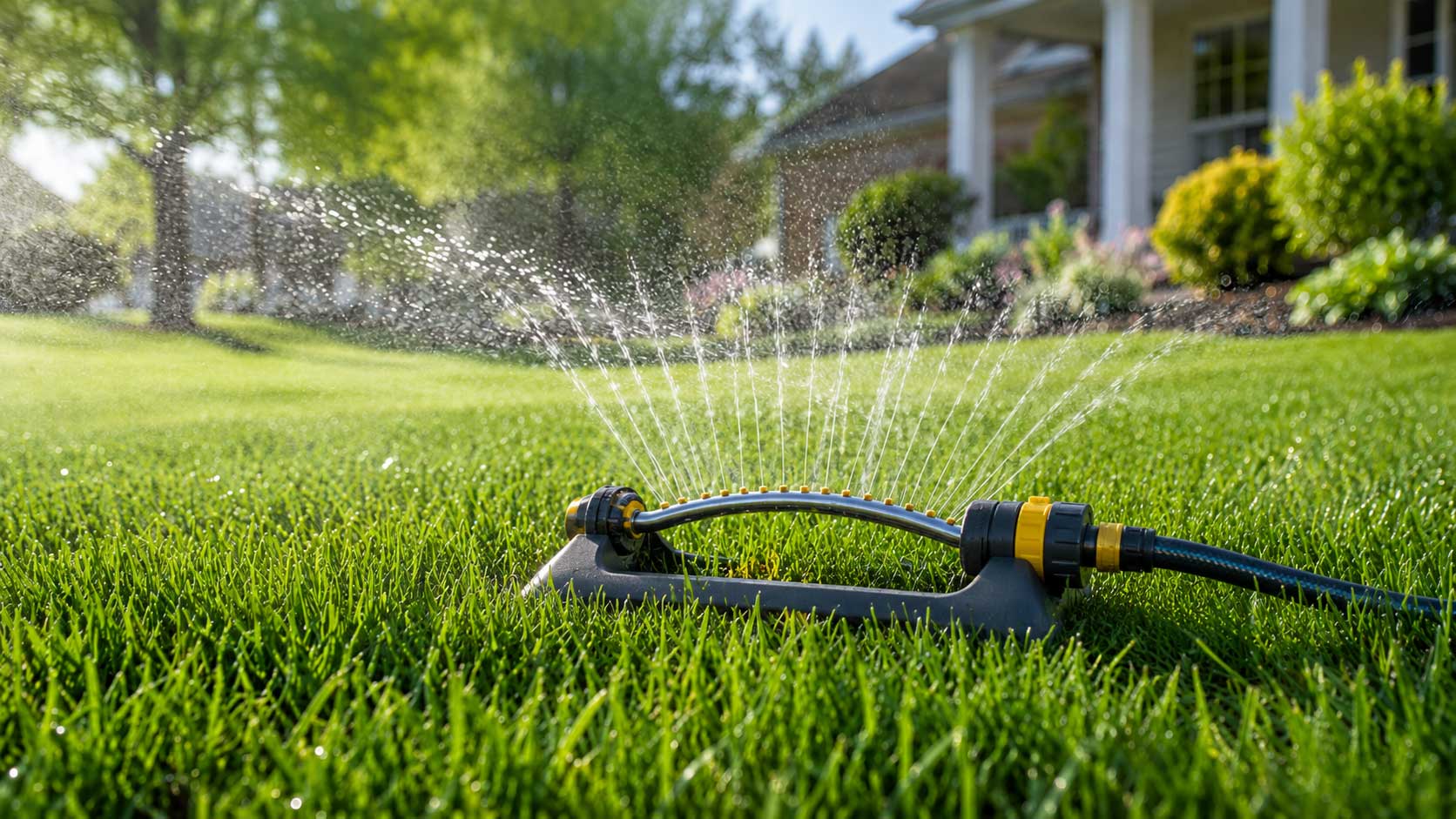
Lawn Watering Tips for New England Lawns
A healthy lawn isn't just about what you put into it — it's also about how you water it. At Simply Safer Premium Lawn Care, our organic and organic-based lawn care programs are designed to build stronger, more resilient turf from the ground up. But your watering habits play a major role in how well your lawn responds. For homeowners in Massachusetts and Rhode Island, understanding when, how much, and how often to water can help you get the most out of your lawn care services — and avoid common mistakes that actually work against your lawn.
Most lawns in this region are made up of cool-season grasses that grow best in spring and fall, and naturally slow down during summer. That means your lawn's water needs change throughout the season. You may not need to add any extra water during a rainy spring, but a hot, dry stretch in July or August can be a different story.
The goal isn't to water as much as possible — it's to water in a way that encourages deeper roots, healthier soil, and stronger grass. Deep roots help your lawn handle dry weather on its own. Shallow, frequent watering does the opposite — it trains roots to stay near the surface, where the soil dries out fast.
Watering also works hand in hand with other smart lawn care habits. Practices like mowing high, improving soil health, aerating & overseeding compacted areas, and investing in organic-based lawn care all help your lawn use water more efficiently. A thick, healthy lawn shades the soil, reduces evaporation, and bounces back faster from summer stress.
Below are some of the most common lawn watering questions we hear from homeowners.
How much water does a New England lawn need?
Most established lawns need about one inch of water per week, including rainfall. If your lawn is getting enough rain, you may not need to water at all. A simple way to check your sprinkler output is to place a few empty tuna cans or shallow containers around the lawn while watering. When they collect about an inch, you know how long your system takes to deliver that amount.
How often should I water my lawn?
For established lawns, two to three times per week is usually plenty — as long as you're watering deeply each time. Sandy soils may dry out faster during hot stretches and need a bit more attention, while heavier soils tend to hold moisture longer. The right schedule depends on your soil type, sun exposure, and recent rainfall.
What is the best time of day to water grass?
Early morning, before the heat sets in. This gives the water time to soak into the soil while the grass blades dry during the day. Midday watering wastes more water to evaporation, and evening watering can leave grass wet overnight, which can invite disease, especially in New England's humid summers.
Is it bad to water my lawn every day?
For an established lawn, daily watering is usually not the best approach. There is one exception: new grass seed. Newly seeded areas need frequent, light watering until the seed germinates and begins to establish.
How should I water new grass seed?
Keep the seedbed consistently damp — not soaked. That usually means watering lightly once or more per day, depending on the weather Once the new grass starts filling in, gradually shift to less frequent, deeper watering to help young roots grow down into the soil.
How do I know if my lawn needs water?
A few signs to watch for: footprints or mower tracks that stay visible, grass blades that fold or curl, a dull or bluish-gray color, and dry, hard soil near the surface. These signs don't always mean trouble — they're just cues that it might be time for a good deep watering.
Should I water if my lawn turns brown in summer?
Not necessarily. Cool-season grasses in New England often go dormant during hot, dry weather. The lawn may look brown, but it's usually not dead — it will typically green back up when cooler temperatures and rain return. If you want to keep things green through summer, you'll need to commit to consistent watering. If you let the lawn go dormant, just avoid heavy foot traffic and follow any local watering restrictions.
Can overwatering hurt my lawn?
Yes. Too much water can lead to soggy soil, increased runoff, more disease pressure, and nutrients washing away before the grass can use them. If water is running down the driveway or pooling in the yard, you're applying it faster than the soil can absorb it.
Does mowing height affect watering?
Yes, it does. Taller grass shades the soil and slows moisture loss, which means you may not need to water as often. For most New England lawns, keeping the mowing height around 3 inches or higher is a good guideline — and be sure to follow the one-third rule so you're not stressing the lawn on top of dry conditions.
What is the best overall watering advice?
Water deeply, water early, and water only when your lawn actually needs it. Pay attention to rainfall, soil conditions, and the signals your lawn is giving you. A strong lawn starts with healthy soil and strong roots — and when it's cared for properly, it can handle New England's changing weather with less stress and a lot less water. If you're not yet a customer, we'd love to help. Contact us for a free quote!


Rick H
3 weeks agoLove the mosquito & tick spray. It's great to keep the bugs off the dog and keeps the ticks from coming into the house on the dog. Highly recommend Simply Safer!
 View on Google

Darryl Panzer
1 month agoI've been using Simply Safer Lawn Care for a few years now. They do a great job. Aiden's attention to detail doesn't go unnoticed. It's refreshing to have a company that doesn't cut corners and actually cares about your lawn.
View on Google

silvestre faria
2 months agoVery happy with my experience with Simply Safer Lawn Care
View on Google