

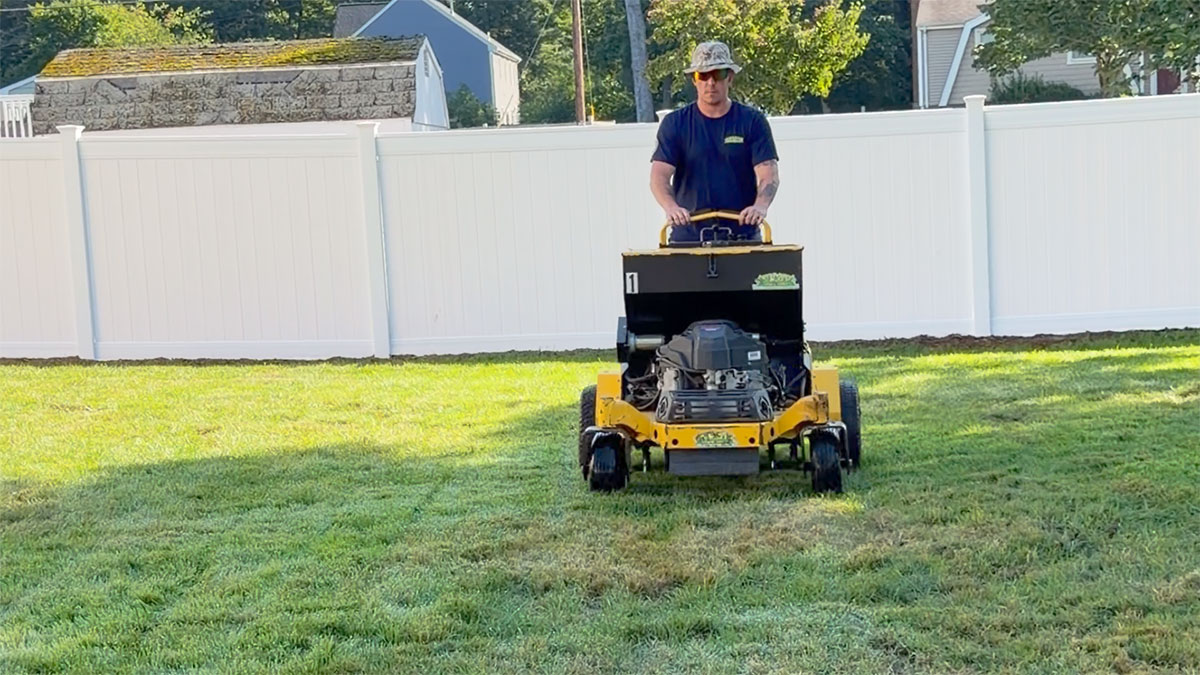
Fall Lawn Recovery Tips for New England Lawns
The combination of fall aeration and overseeding along with topdressing helps New England lawns recover from summer heat, drought, foot traffic, and soil compaction.
Summer has put our lawns through a lot: heat, dry weather, weeds, and plenty of foot traffic. As we head into fall, this is one of the best times of year to help your lawn recover, using three services that work together: aeration and overseeding and topdressing.
When should you aerate and overseed a lawn in Massachusetts or Rhode Island? Late summer through early fall is generally the best time to aerate and overseed cool-season lawns in Massachusetts and Rhode Island. From approximately August through mid-October, the soil stays warm enough for germination while cooler air and less weed competition help new grass establish before winter.
Does Your Lawn Need Aeration and Overseeding?
Between the heat, dry stretches, and heavier foot traffic from kids, pets, and cookouts, most lawns come out of summer a little worse for wear. Soil gets compacted, grass thins out, and weeds move into bare ground before your grass can claim it back. A few signs point to a lawn that would benefit from fall aeration and overseeding:
- Thin grass or bare patches after summer
- Hard, compacted soil
- Water pooling or running off instead of soaking in
- Heavy use by kids or pets
- A thick layer of thatch
- Weeds moving into bare spots
- Grass that stays weak even with regular watering and fertilizing
If more than a couple of these sound familiar, your lawn is a good candidate for this fall's service.
Aeration and Overseeding: The Core of Fall Recovery
Aeration and overseeding are done together for a reason: new seed needs the openings that aeration creates to actually reach the soil and take root. Aeration relieves the compaction summer traffic causes, and the seed that goes down right after has a real shot at germinating instead of sitting on top of thatch.
Fall is the right season for this. Cooler air, soil that's still warm from summer, and less weed competition all give new grass seed the best chance to establish before winter.
The exact timing depends on soil temperature, recent rainfall, and the expected first frost. Lawns seeded earlier in the window have more time to establish, but September often provides an excellent combination of warm soil and cooler daytime temperatures.
New seed typically begins filling in within a few weeks of a fall service, though the biggest difference shows up the following spring, when the lawn comes back noticeably thicker, healthier, and greener. We recommend aerating at least every other year to keep compaction and thatch from building back up.
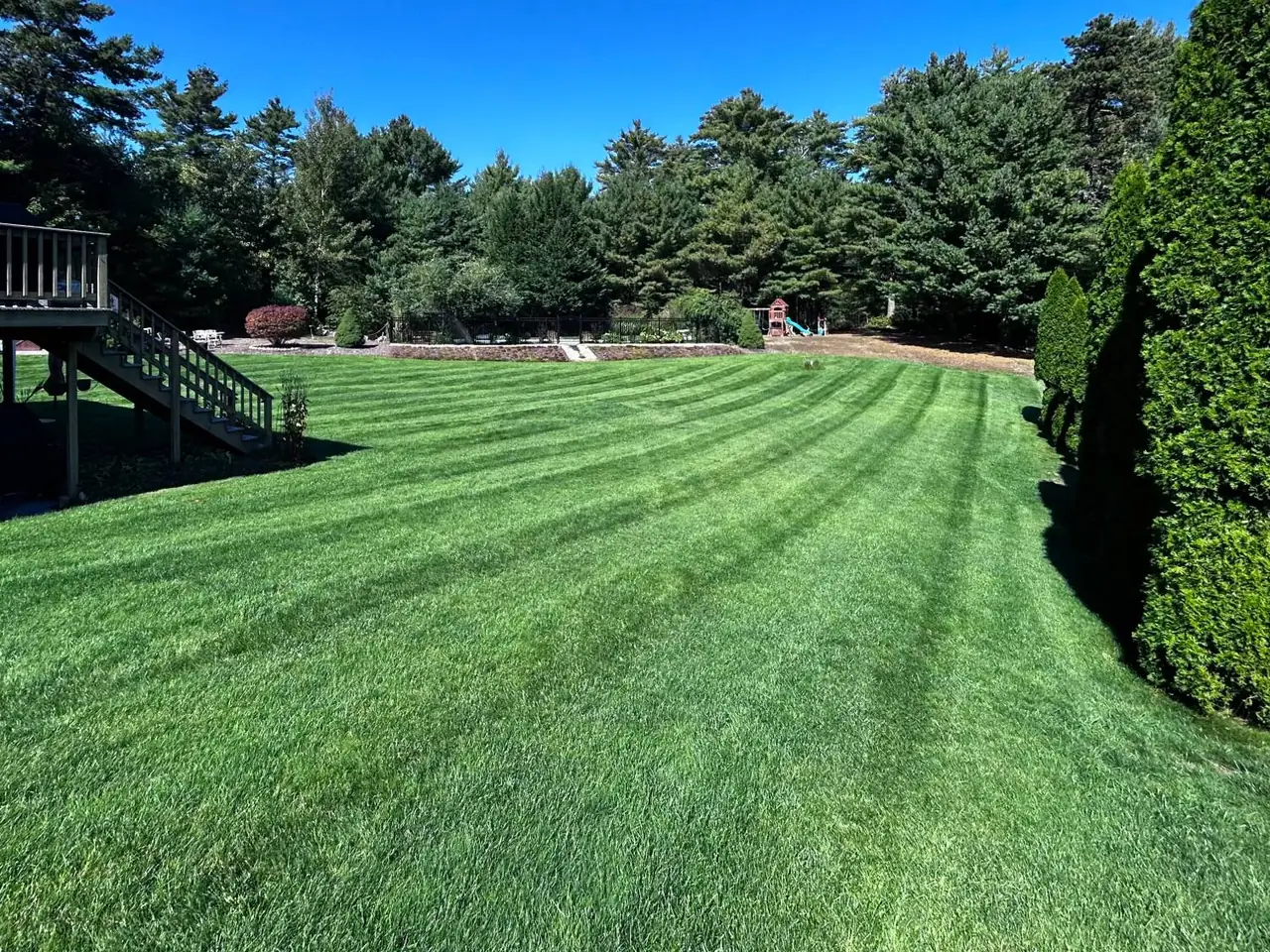
The window for Massachusetts and Rhode Island lawns runs from August through mid-October. If you're reading this in September, you're right in the middle of it.
Learn more about our aeration and overseeding service.
Schedule Fall Aeration and Overseeding
Fall appointments are limited to the seasonal growing window. New customers save 15% on aeration and overseeding through September 30, 2026. Request a free quote or call 1-866-GO-SAFER (467-2337).
How Simply Safer Aerates and Overseeds New England Lawns
We use core aeration, which removes small plugs of soil from the lawn rather than simply poking holes in it. This relieves soil compaction and creates openings that help air, water, and nutrients reach the grass roots.
Overseeding spreads new grass seed throughout the lawn to fill in thin and bare areas. Performing it with core aeration improves seed-to-soil contact, giving the new grass a better opportunity to germinate and become established before winter.
Topdressing: Rebuilding the Soil Underneath
Aeration and overseeding work on the surface. Topdressing with organic compost works on what's underneath it. A thin, even layer of compost restores organic matter to depleted soil, improves soil structure and biological activity, and increases the soil's ability to hold moisture, all of which support stronger, deeper root development.
Topdressing can be applied as its own treatment to help a lawn recover from heat and drought stress, or combined with fall aeration and overseeding for even better seed-to-soil contact. Either way, its value builds over time. A single application helps, but regular topdressing is what compounds into real improvement in your lawn's color, density, and overall vigor.
What Should You Do After Aeration and Overseeding?
New grass seed needs different care than an established lawn while it's getting started. Keep the soil surface consistently moist with light, frequent watering, several short waterings a day rather than one deep soak, for the first two to three weeks. Once the new grass has been mowed a couple of times, you can shift back to deeper, less frequent watering.
Hold off on mowing until the new grass reaches about three inches, then mow with a sharp blade at your normal height rather than cutting it short. Keep foot traffic light on newly seeded areas for two to three weeks so the young roots aren't disturbed. The small soil plugs aeration leaves behind don't need to be picked up. They break down on their own within a week or two and return organic matter to the soil.
Germination usually becomes visible within one to two weeks, depending on soil temperature and weather, though the lawn will still look thin through the rest of fall. The real transformation, a thicker, greener lawn, shows up the following spring.
For lawn areas you aren't reseeding this year, our lawn watering tips and smart mowing practices articles cover fall care in more detail.
A Few Common Questions
When is the best time to aerate and overseed my lawn?
August through mid-October is the window for Massachusetts and Rhode Island lawns, with September often giving the best combination of warm soil and cooler air.
Is October too late to overseed a New England lawn?
Not necessarily, but earlier is better. Seed put down in early October has less time to establish before the first hard frost than seed put down in September, so waiting too long into the month raises the risk of thin coverage going into winter.
Should I water after aeration and overseeding?
Yes. Keep the soil surface consistently moist with light, frequent watering for the first two to three weeks, then shift back to deeper, less frequent watering once the new grass has been mowed a couple of times.
Should soil plugs be removed after core aeration?
No. The small plugs break down on their own within a week or two and return organic matter to the soil, so there's no need to rake or pick them up.
How long does grass seed take to germinate in the fall?
Usually one to two weeks, depending on soil temperature and weather, though full fill-in takes longer.
Can aeration and overseeding repair drought damage?
In most cases, yes. Aeration relieves the compaction that makes drought stress worse, and overseeding fills in the thin spots left behind. Patches that are completely dead may need more direct reseeding rather than overseeding alone.
Is aeration, overseeding, and topdressing worth doing together?
It's a strong combination. Topdressing adds organic matter and improves the soil the new grass is rooting into, while aeration and overseeding relieve compaction and fill in thin areas.
How often should my lawn be aerated?
At least every other year, to keep soil compaction and thatch buildup from undoing the progress you've made.
Can I walk on the lawn after overseeding?
Try to keep foot traffic light for two to three weeks while the new grass is establishing. Normal use is fine again once it's been mowed a couple of times.
Ready to Help Your Lawn Bounce Back?
We've been helping Massachusetts and Rhode Island homeowners grow healthier lawns for 25 years. We provide fall aeration and overseeding throughout our service area, including communities surrounding Wrentham, Franklin, North Attleboro, Medfield, Walpole, Foxboro, Worcester, and Providence.
Give us a call at 1-866-GO-SAFER (467-2337) or contact us for a free quote on aeration, overseeding, and topdressing.


Jeanne Gallahue
3 weeks agoJon, is professional and terrific! Always a pleasure to have him servicing our property!
 View on Google